Kho Liang Ie
Major retrospective of Kho Liang Ie surveying his furniture and interior designs from the 1950s–1970s at the Stedelijk Museum
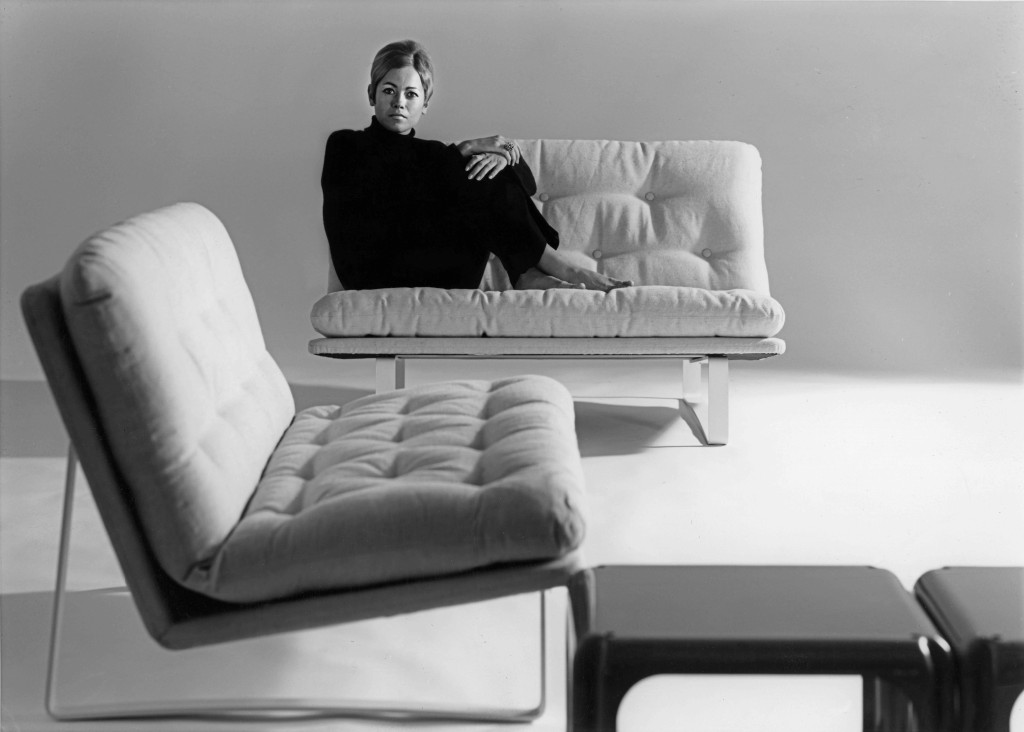
The Stedelijk presents the first major museum retrospective of Kho Liang Ie who, with his designs for furniture and interiors, played a key role in Dutch design from the 1950s to the mid-1970s. Through his poetic approach and unconventional choice of materials, he infused his functionalist designs with an element of playfulness. He also cultivated a large international network and introduced fresh design talent to the Netherlands.
Early success When Kho Liang Ie passed away in 1975 at the age of 47, he left behind an impressive body of work, including furniture, interiors, and graphic design. He was born in 1927 in Magelang, Indonesia, the country where the Kho family, originally from China, had lived for generations. In 1949, he moved to the Netherlands and studied interior architecture at what would later become the Rietveld Academy. While still a student, he achieved success: his design for a drinks cabinet was published in the prestigious magazine Goed Wonen, and his graduation project for the renovation of a youth hostel was actually carried out. After graduating, Kho worked as a consultant and exhibition maker at the Goed Wonen foundation, and from 1956 to 1959 he worked with Wim Crouwel on designing exhibitions, stands for companies, and posters. This led to their work being featured several times in the renowned international magazine Domus. Kho also designed a lot of furniture during this period. In 1957, he and Wim Crouwel won an important furniture design competition in Cantù, Italy, where six pieces of metal furniture were produced and exhibited.
From Artifort to Schiphol Kho Liang Ie went on to work for several distinguished companies, including Bruynzeel, Mosa (which has resumed production of his wall tiles), and furniture manufacturers CAR and Artifort. His collaboration with the latter lasted for many years. He not only designed furniture for Artifort (some of which is still in production or has been reintroduced), but also served as an ‘aesthetic consultant’ for all the brand’s products and events – a remarkable step at the time. With his visionary approach, Kho contributed to the development of what were then modern concepts such as open-plan offices, interiors for one-person households and, together with Geoffrey Harcourt, flexible and modular furnishings for small homes.
In 1963, his impressive track record led to a major commission: the design of the new terminal building at Schiphol Airport, which opened four years later. Noting that travellers are often anxious, Kho designed a barrier-free entrance for a streamlined arrival; two discreet steps leading down after passport control instilled a sense of calm, while the balustrade handrails incorporated oak for a warm, natural feel.
Aussi au Stedelijk Museum Amsterdam
11
Experimental Jetset – Circuits

In Situ #2 — Farida Sedoc Social Capital

Danh Vo — πνεῦμα (Ἔλισσα)
Beyond the Manosphere

Collection
POST/NO/BILLS #6 — Hedy Tjin: Universal Color
Post/No/Bills #6

Yayoi Kusama
Adam Pendleton
Collaborative Artistic Practices - Proposals for the Museum Collection